The community of Darwin, California, is located 22 miles southeast of Keeler, California, and eight miles west of the Death Valley National Park western boundary. Darwin was named after local rancher, miner and explorer, Darwin French. French led a party into Death Valley area in 1860 to search for the mythical Lost Gunsight Mine of ‘49er fame. The French party traveled through the wash, canyon, and the community area all taking the first name of the group’s leader.
The first recorded lead-silver-zinc mine, the Promontario, was discovered by Rafael Cuervo in October 1874. The silver and lead discovery led to the founding of Darwin as a boomtown settlement. By 1877, three furnaces were in operation. The greatest producing mines were the Christmas Gift, the Defiance, and the Lucky Jim.
Darwin had a reputation as one of the most violent towns in the west. Of the 124 graves in the Darwin cemetery in the late 19th century, 122 were reported to have been occupied by victims of gunshots or knifings.
The Darwin post office opened in 1875, closed for a time in 1902, and remains open. The area prospered when Eichbaum Toll Road to Stove Pipe Wells Village opened in 1926. The western end of the toll road was reached after traveling from Darwin, through the Zinc Hill area, to the mouth of Darwin Wash at Panamint Valley. When Death Valley became a National Monument in 1933, the state bought the toll road to allow free access to the monument. In 1937, a new cutoff bypassed Darwin, isolating the town from today’s California Highway 190.
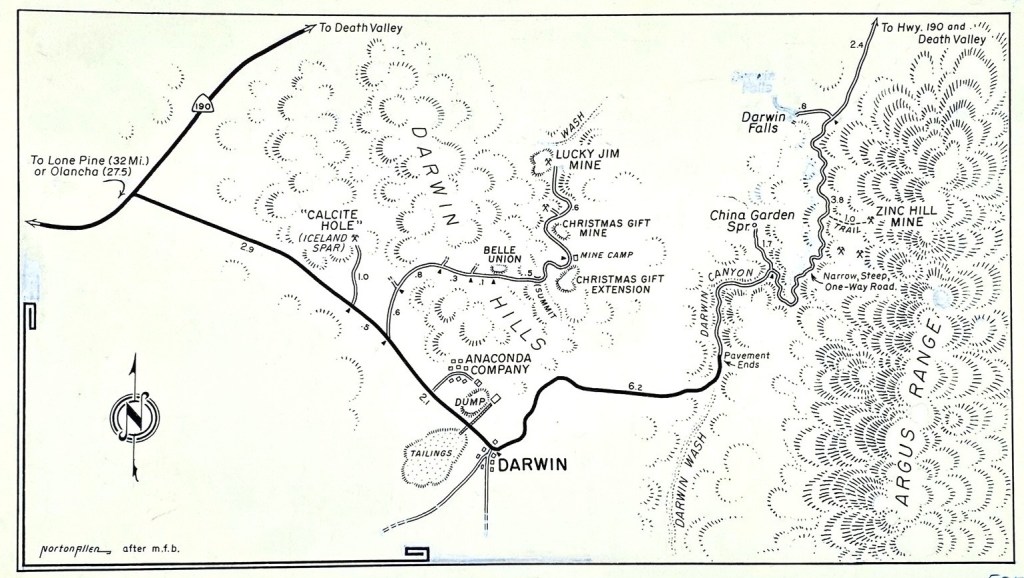
Map of the Darwin Area, Desert Magazine, February 1963.
Defiance Mining Company
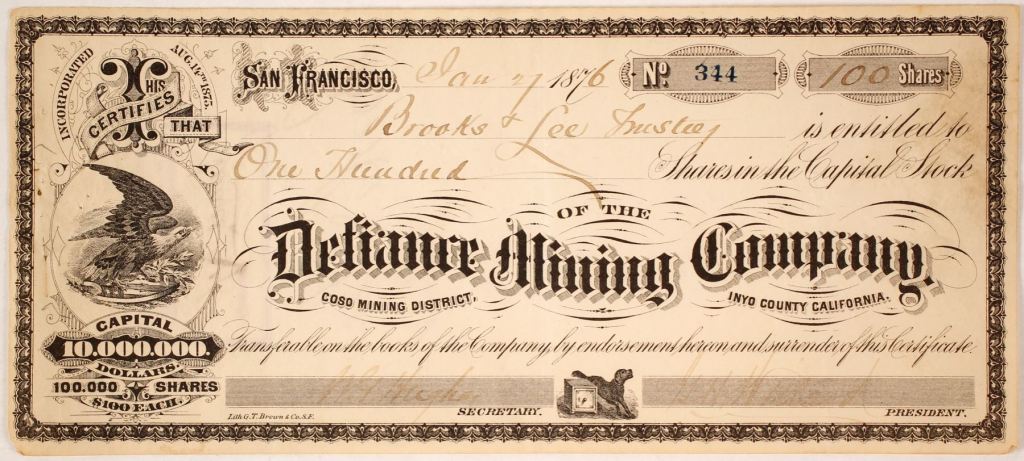
Certificate No. 344, One Hundred Shares to Brooks & Lee Trustees, January 27, 1876.
[see Arcadia’s Ghost Towns of Death Valley for Defiance History Summary]
Darwin Silver Company
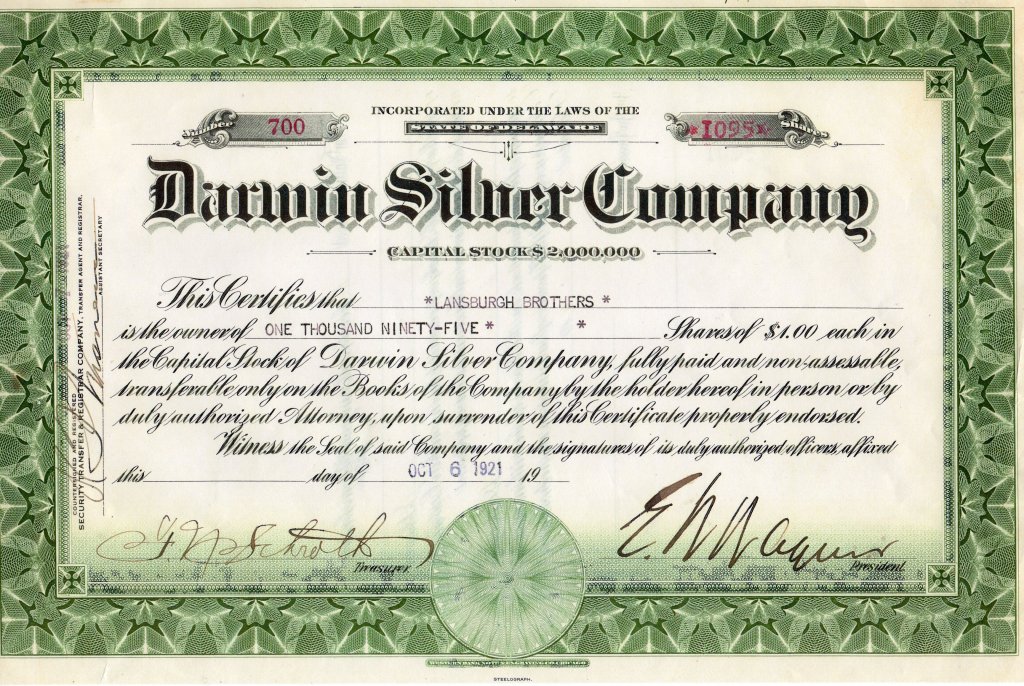
Certificate No. 700, One Thousand Ninety Five Shares to Lansburgh Brothers, October 6, 1921. F. N. Schroth, Treasurer; E. C. Wagner, President.
The Darwin Silver Company mines and mill were in the eponymous district and about 2 miles northeast of the town, west of Panamint Valley. The company was incorporated in 1920 in Delaware as a reorganization of the Darwin Lead and Silver Mines Development Company. Properties included the Columbia, Defiance, Independence, Lane, Liberty, Lucky Jim, and Promontory mines.
After producing $2 million in lead and silver in 1920, operations ceased in 1921. In 1922, lessee A. G. Kirby, former manager at Darwin Silver, was able to mill and treat about 80 tons of ore per day. Half of the run was re-working the ore dumps, and the other half was sourced from the Lucky Jim mine.
By 1923, the company ran into unspecified financial troubles and ceased operating.
Calavada Copper Company

Certificate No. 1518, Five Hundred Shares to James O. David, January 17, 1916. Frederick C. Hart, Treasurer; E. B. Bronson, President.
The Calavada Copper Company was reported in The Copper Handbook editions from 1916 to 1920 to own nine patented claims on 180 acres at Darwin, “…not being developed at present.”
The last information we can find is from the 1930 edition of Marvin Scudder Manual of Extinct or Obsolete Companies. Apparently, Calavada was out of business by that year.
Anaconda Copper Mining Company
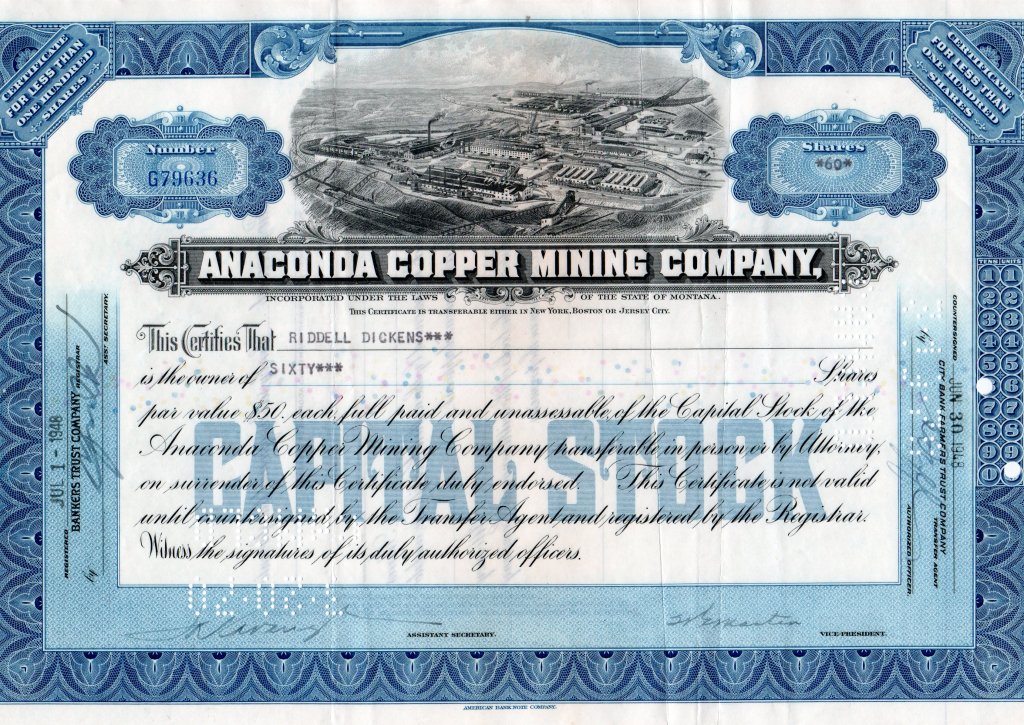
Certificate No. G79636. Sixty Shares to Riddell Dickens, June 1, 1948. J. K. Cavanaugh, Assistant Secretary; T. McMaster, Vice President.
Beginning around World War I, Darwin mines went through several consolidations and various operators. These included the Darwin Development Company (1915), the Darwin Silver Corporation (1917), American Metals Company (1925), and Imperial Metals (1940). The Anaconda Copper Mining Company bought the Darwin mines in August 1945. During and shortly after World War II, lead and silver prices remained set by the U.S. Office of Price Administration at values below production costs. Anaconda also found it difficult to hire miners for the remote Darwin location. In 1954, Anaconda closed the Darwin mines.
Inyo Talc Company, Inc.
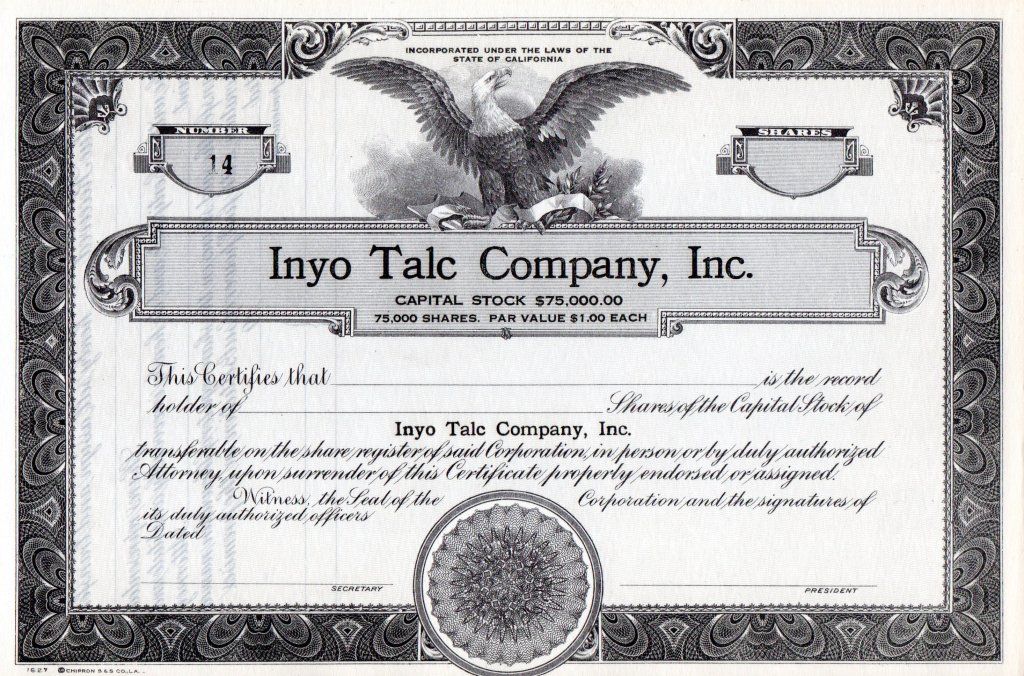
Certificate No. 14, Unissued.
Hydrated magnesium silicate, also known as talc, is well known in the Death Valley region. It was mined in Warm Springs Canyon, on the eastern flank of the Panamint Mountains, at the southern end of Death Valley, and east of Tecopa Springs. Another large deposit of talc occurs at Talc City Hills, about ten miles northwest of Darwin, California. Not just used in baby powder and cosmetics, talc is a vital ingredient in ceramics, paint, and dry lubricant powders.
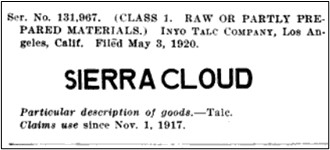
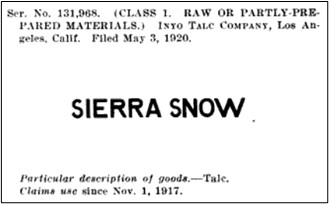
Talc was probably first mined in the Talc City Hills in 1915 at the Simonds Mine, named for the mine’s superintendent. The mine was purchased by the Inyo Talc Company, which was later renamed the Sierra Talc and Clay Company. The talc ore was shipped from the mine by truck to Keeler, California, on the eastern shore of Owens Lake, thence by rail to San Francisco for processing. The mine was known to have operated into the 1960s.
Arondo Gold Mining Company
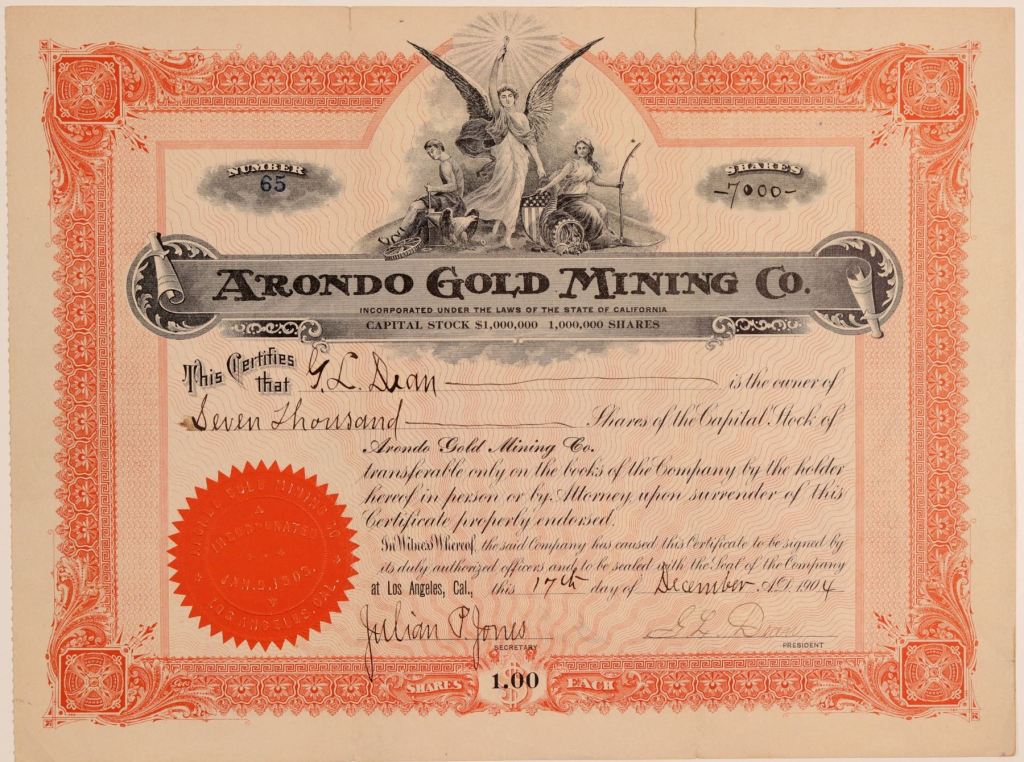
Certificate No. 65, Seven Thousand Shares to G. L. Dean, December 17, 1904. Julian P. Jones, Secretary; G. L. Dean, President.
The Arondo Gold Mining Co. mines were located in the Argus Range, due west of Ballarat, California. At times, the mine office was reported to be at Searles, California, and at Ballarat.
The Inyo Independent reported on Sept. 9, 1904, the company had produced a gold bar from work the previous month of 82 ounces at 0.828 fine, from processing 80 tons of ore.
Note that the stock certificate lacks the usual statement of, “Fully paid and non-assessable.” In a legal advertisement in the Independent In November 1907, the company directors approved an assessment of 2 cents per share – not a good sign. By May 1913, it was all over for Arondo, with the company’s claims, property and water rights auctioned-off by the Inyo County Sheriff.
 Death Valley Mining History - Thru Scripophily